Communication
Communications within a Skyve application is where ad-hoc and system email messages are created and edited. New email messages can be created and use data from within the system as the recipient and/or the body of the email. System messages can also be maintained here if notifications need to be updated over time, for example signatures or contact details.
Create and send a new Communication
Prerequisites: Your application has its SMTP settings configured to enable sending email. If SMTP is not configured, a warning banner is shown at the top of the Communication view.
The following example will walk through using the built in Communication feature from the admin module to send an email from within a Skyve application. In this example, we will use the Tag feature to select some Contacts as the recipients of the test email.
- Login with a user which has the
ContactManagerorSecurityAdministratorrole -
Switch to desktop mode if not already in it, by clicking your username in the top right hand corner and choosing
Switch Mode— see Switching Interfaces. Tagging records from a list is only available in desktop mode.
- Navigate to the Admin module, and select
Contacts -
From the toolbar Tag dropdown, select
New Tag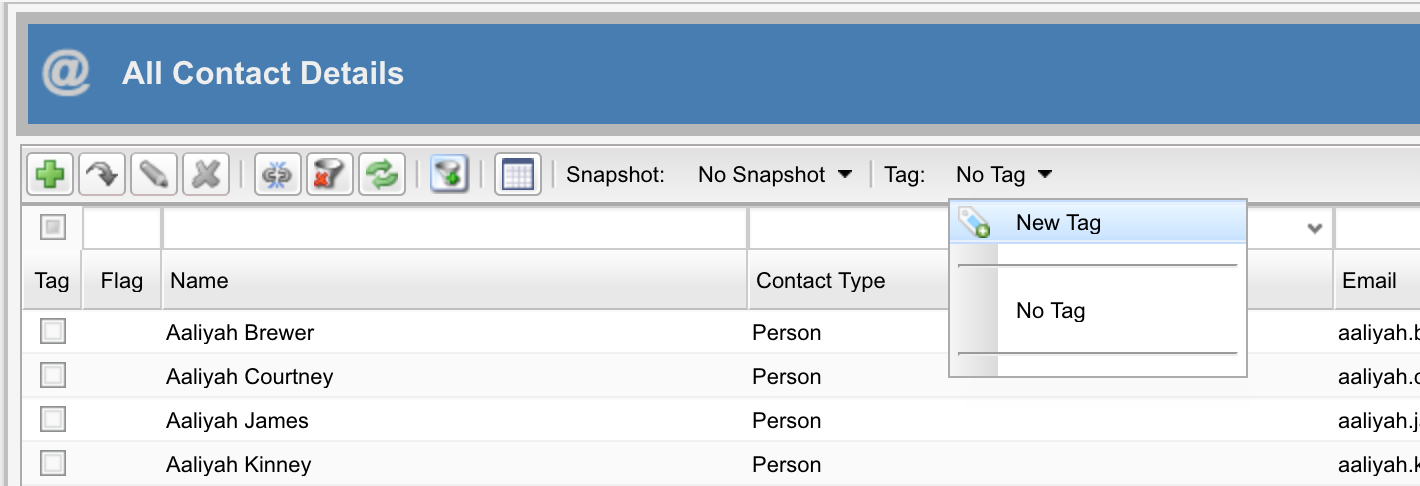
- Name your tag
email contacts - Click
OK -
The toolbar now shows we have the new tag active
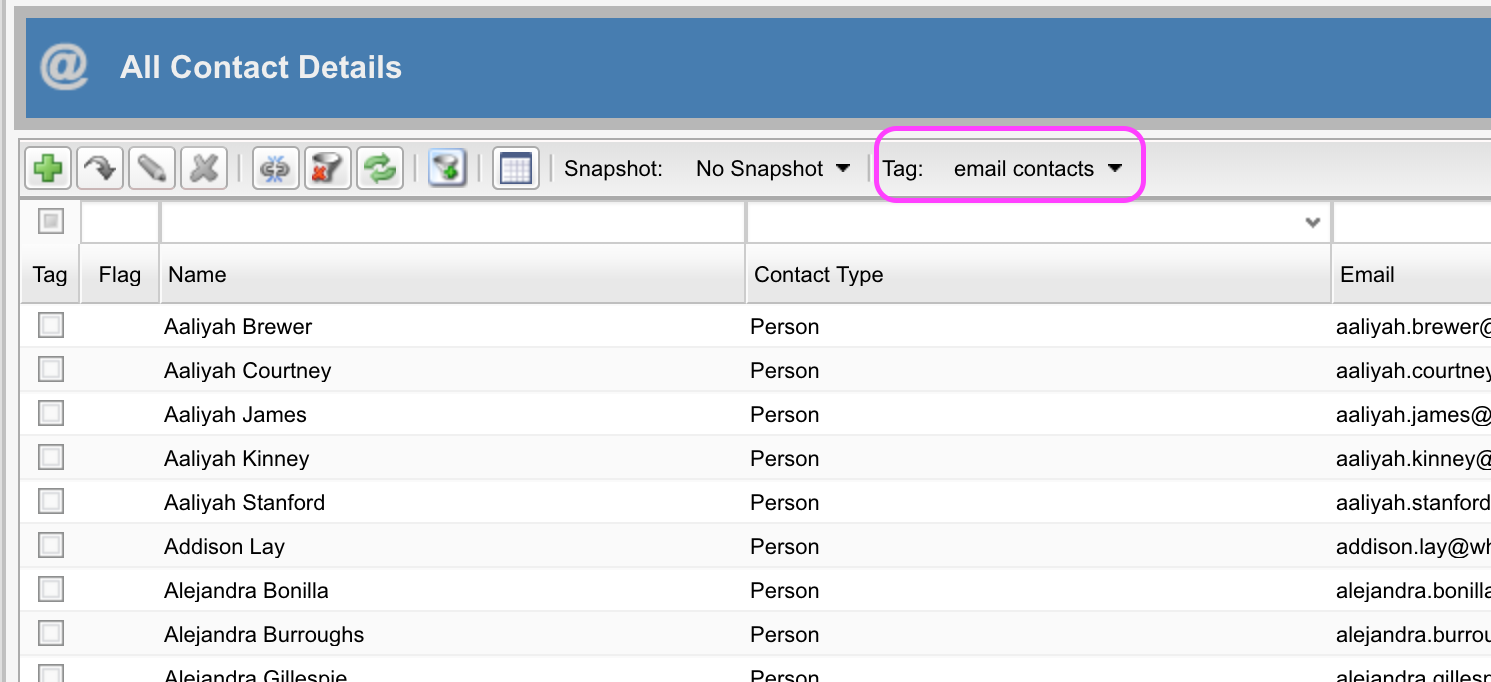
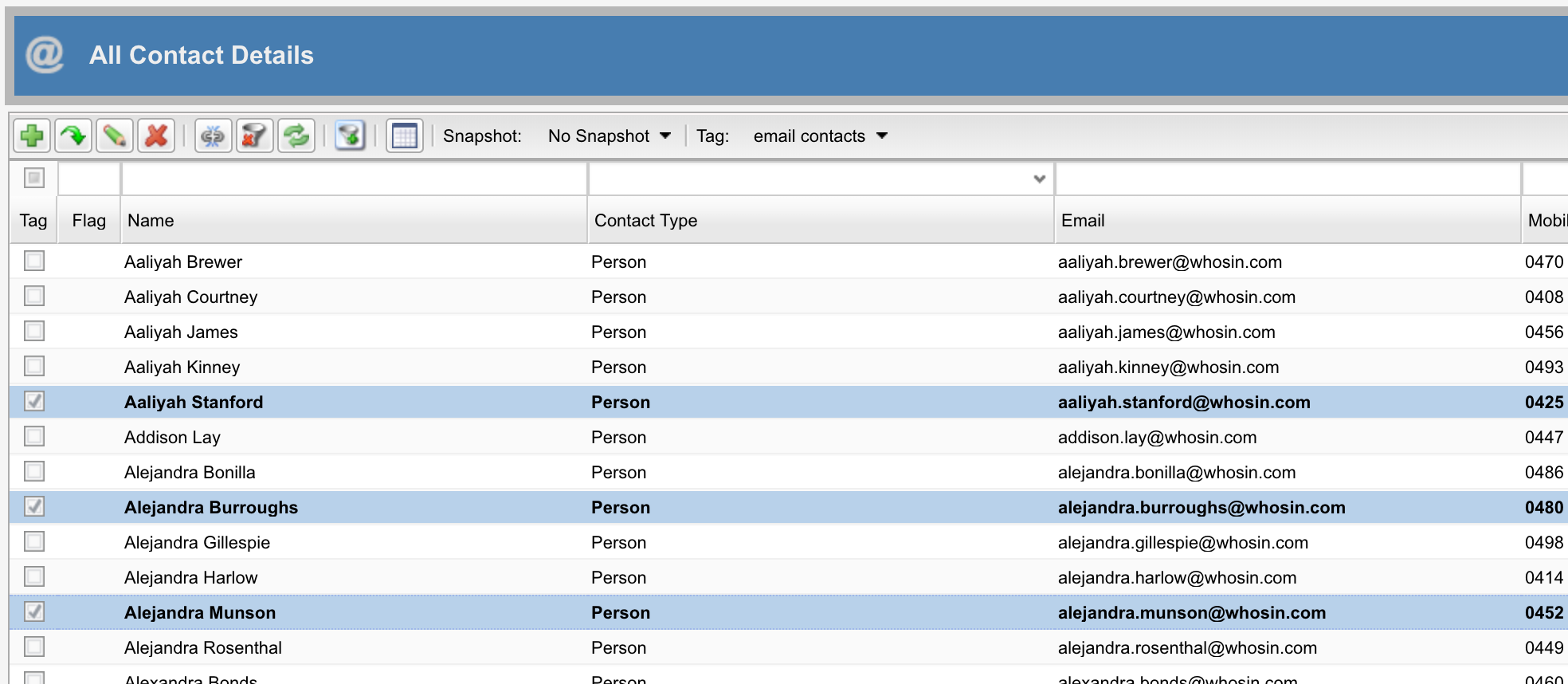
- Tag some contacts by clicking the checkbox next to contacts in the first column (Tag)
-
The tagged contacts will update to be marked in bold
- From the admin menu, select Communication->
Communications - Click the
+symbol to create a new Communication - On the
Contentstab, entertest emailinto Description - In the
Tofield, we are going to enter an expression to use a field from the tagged contacts. This operates similarly to a mail merge, and Skyve will substitute the expression value with the contact value for each tagged record. Enter{email1}, which is the name of the contact email address field. - Enter
test emailintoSubject (expression)(this can also contain expressions) -
Enter some text into
Body (expression). In the default (responsive) interface this is a plain text field — type your message, or paste in HTML directly. In desktop mode, anEditbutton opens a rich HTML editor instead — enter your text and clickApply.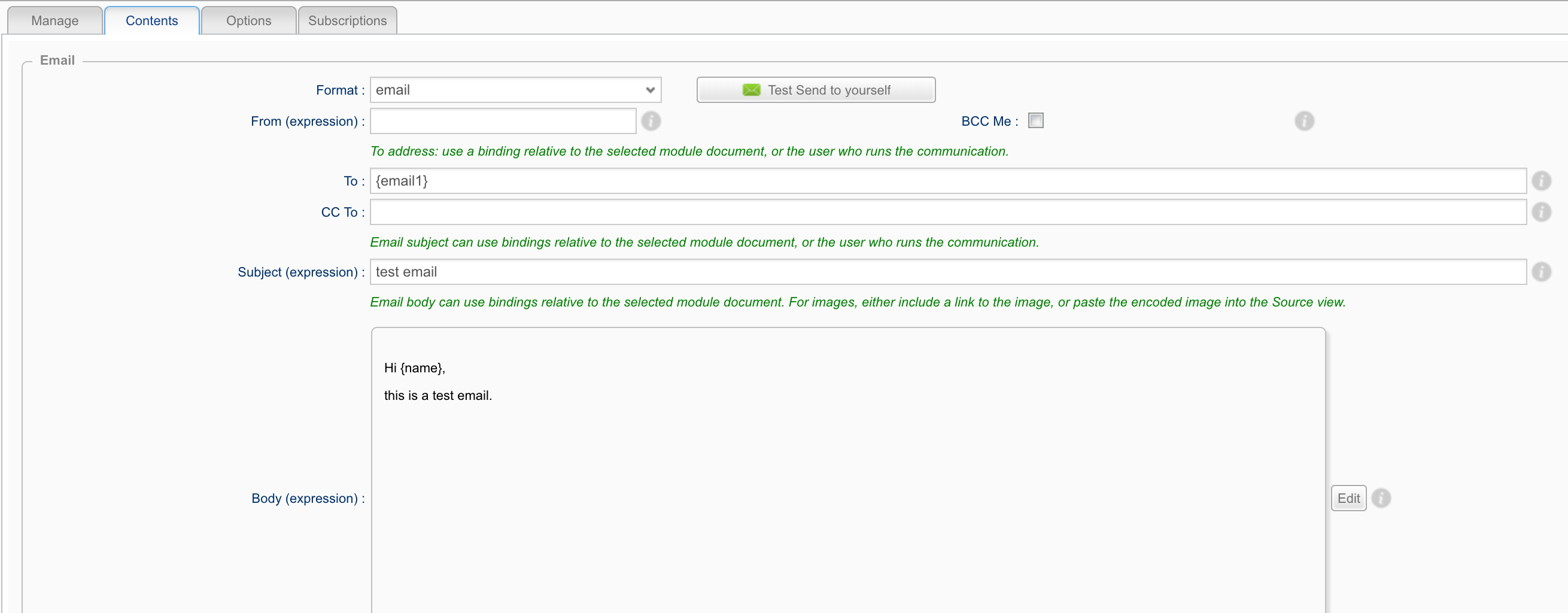
- Select the
Managetab - Select
Adminas the Module from the drop-down - Select
Contactas the Document from the drop-down - Select the tag we just created,
email contacts, from the Tag drop-down - Click
Saveto save your Communication -
Click
Get Countand it should show the number of tagged Contacts in the Results section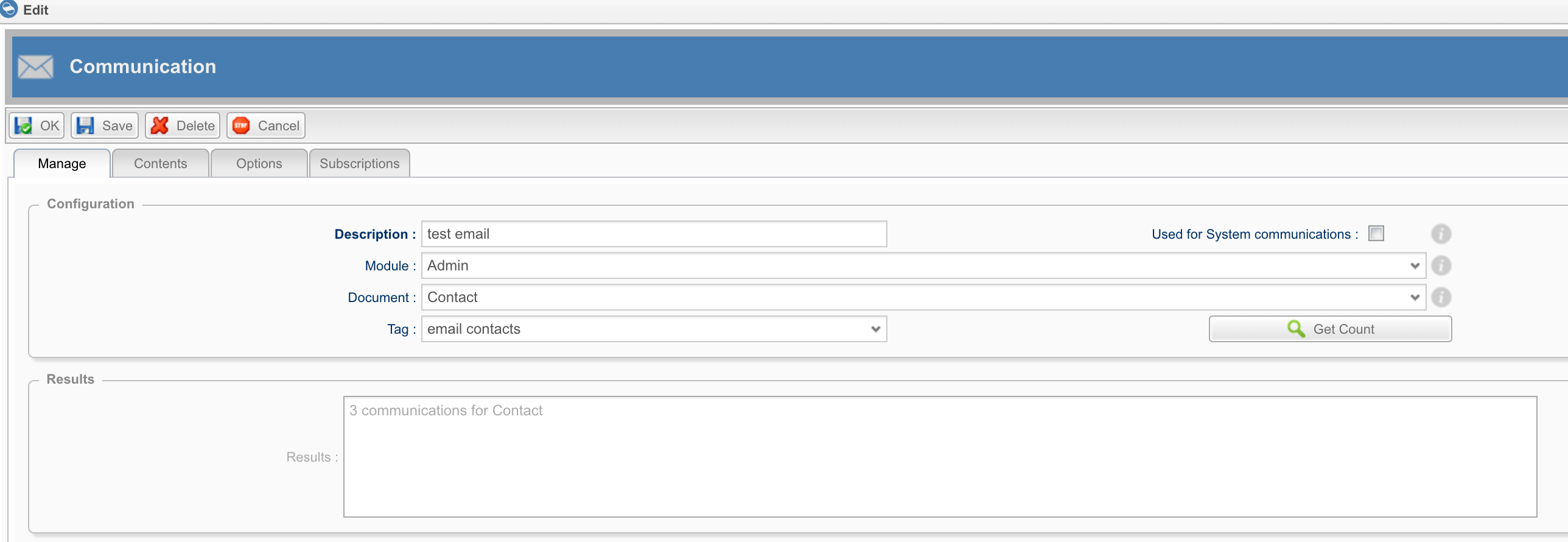
- Attachments can be added from the
Attachmentstab if required (see Attachments and calendar invites) - Optionally, click
Test Send to yourselffirst — this sends the email to your own email address, using the first tagged record for expression substitution, so you can check the result before sending to everyone. At least one record must be tagged or the test will fail with an error. - Click
Send Now - A new background job will be initiated to send your email immediately in the background. The results of the job can be checked from the
Jobsscreen, or by clickingRun Result Check Jobon theManagetab.
Two further options on the Manage tab affect the send:
- Untag successful documents: each record is removed from the tag as its email sends successfully, so after a partial failure the tag contains only the records still to send.
- Notify when job is complete: sends you a notification email when the send job finishes.
Editing an existing Communication
When you have existing Communcations in your application and wish to make changes to the content of the email.
Prerequisites: Your application has at least one ad-hoc or system communication defined
- Login with a user which has the
ContactManagerorSecurityAdministratorrole - From the admin menu, select Communication->
Communications - Open the communication you wish to edit
- Select the
Contentstab - Modify the
ToorCC Tofields if you would like to change who receives the communication. This can be an expression. - Modify the
Subject (expression)and/or theBody (expression)with any desired changes. These can contain expressions. - Click
OKto save the modifications
Note: communications marked Used for System communications (such as the built-in password reset and user invitation emails) have their Description, Module and Document locked and cannot be deleted — you can still edit the subject and body. Untick the system flag first if you really need to change or remove one.
Embedding an image
To embed an image in the email body without hosting it externally, use the Add Uploaded Image button in the Options section of the Contents tab. Upload an image file and Skyve will append it to the body as an embedded image.
Attachments and calendar invites
The Attachments tab allows up to three files to be attached to the email.
The Attachments tab also provides a Calendar section for sending calendar invites. Tick Include Calendar Item on the Contents tab, then specify the Title (expression), Start Time, End Time and Description (expression) — recipients receive Google and Yahoo calendar links in the email body along with an .ics attachment for Outlook and Apple Calendar.
Unsubscribe links and Subscriptions
For bulk communications, recipients should be given a way to opt out:
- On the
Contentstab, clickAdd Unsubscribe Linkin theOptionssection — this appends an unsubscribe link to the email body (using the{unsubscribeUrl}token, which is substituted per recipient). - When a recipient clicks the link, a declined Subscription record is created for them for this communication.
- Declined recipients are shown on the communication’s
Subscriptionstab (visible once the communication has been saved), and are automatically excluded from future sends of that communication.
Generating files instead of sending
Instead of emailing directly, a communication can generate the messages as .eml files on the server — useful for review, archiving, or processing by another system:
- On the
Managetab, clickGenerate File Batch— a batch of files is generated, one per tagged recipient. - Each batch appears in the
Batcheslist on theManagetab. - Select a batch and use
Download Zipto download the generated files, orDeleteto remove the batch from the server.